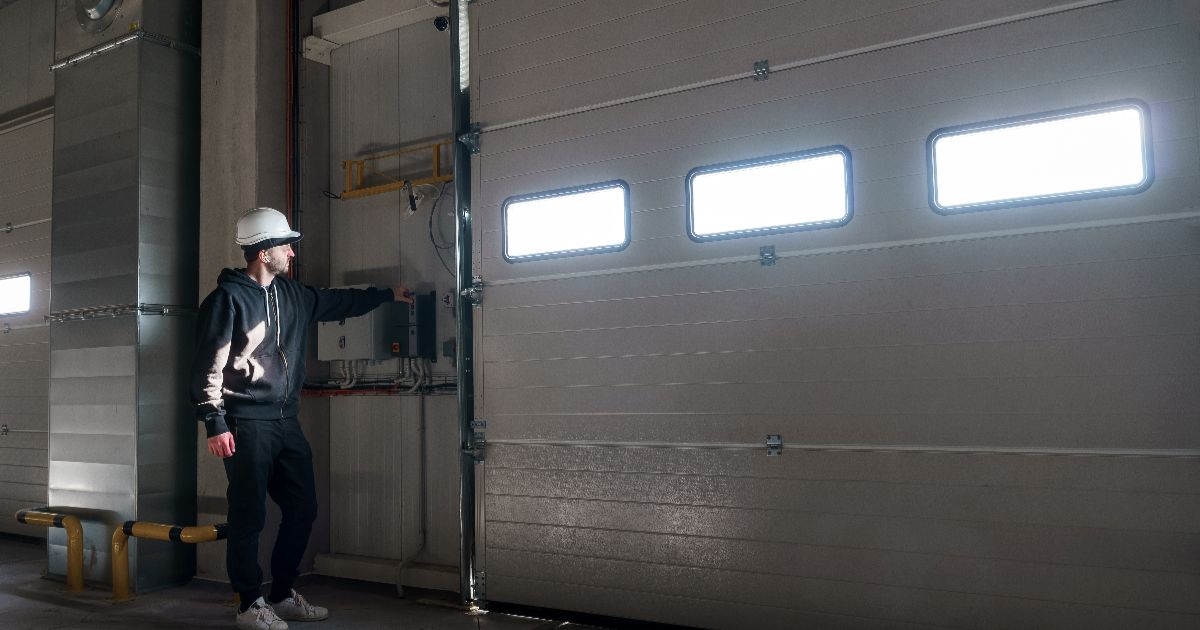
Garage door safety sensors stop the door from closing when something blocks the opening.
When they stop working, your garage door may reverse, blink, click, or stay open.
How Garage Door Safety Sensors Work
Garage door safety sensors use a light beam to check the space under the door. If the beam is blocked, the opener stops the door from closing and sends it back up. Most systems have two small sensor boxes near the bottom of the door tracks. One sensor sends the beam. The other sensor receives it. The opener needs that beam to stay clear before it closes the door. The sensors are low to the ground for a reason. That is where a child, pet, box, bike, or trash can may sit in the door path. If the sensors fail, the door may:- Start closing, then reverse
- Refuse to close from the remote
- Close only when you hold the wall button
- Flash the opener light
- Make clicking sounds
- Stay open even when nothing seems blocked
Garage Door Safety Sensor Lights
Sensor lights help you find the problem fast. The exact color can change by brand, but the patterns below cover the most common garage door sensor lights.Solid Green Light
A solid green light usually indicates that the receiving sensor detects the beam. This is a good sign. It means the two sensors may be aligned and communicating with each other. If the door still will not close with a solid green light, check the other sensor. The other side may have a yellow, amber, orange, or red blinking or dead light. A solid green light does not always mean the full system is perfect. The opener may still have a limit-setting issue, wiring issue, or control board problem.Blinking Green Light
A blinking green light often means the receiving sensor is not getting a clean signal. The sensors may be misaligned, dirty, loose, or blocked. Start by cleaning both lenses with a soft dry cloth. Then move anything near the beam path. Small items can block the sensor even when they are hard to notice. If the light keeps blinking, adjust the sensor slowly. Do not bend the bracket hard. A small move can bring the beam back.Solid Amber, Yellow, or Orange Light
A solid amber, yellow, or orange light often means the sending sensor has power. On many systems, this light stays on when the sensor is sending the beam. This light is usually normal when it stays steady. The key is to check the matching sensor on the other side. The receiving sensor must also show the right light. If the amber or yellow light is solid but the other sensor is off or blinking, the beam is not reaching the receiver.Blinking Amber, Yellow, or Orange Light
A blinking amber, yellow, or orange light can mean weak power, loose wiring, poor alignment, or a sensor fault. It may also mean the sensor is not sitting straight. Check the wire going into the sensor. Make sure it is not cut, loose, or pinched. Look for rust, water, or insect buildup near the sensor box. If the light blinks after storms or heavy rain, moisture may be part of the problem. Miami heat and humidity can wear down small garage door parts faster than many people expect.Red Light
A red sensor light can mean a problem with some garage door opener brands. It may point to misalignment, a blocked beam, a weak signal, or a sensor that is not reading correctly. Do not panic if you see a red light. First, check your opener brand, as some systems use red as the normal power light. The pattern matters more than the color alone. A steady red light may mean one thing. A blinking red light may mean another. If the door reverses and the red light blinks, treat it as a safety sensor issue until it is checked.No Light
No light usually means the sensor has no power. The wire may be loose, the opener may have no power, or the sensor may be bad. Check the opener first. Make sure the motor unit has power. Then check the breaker, outlet, and GFCI outlet in the garage. If the opener has power but one sensor has no light, inspect the sensor wire. A wire can break from water, pests, tools, or a hard bump.One Light On and One Light Off
One light on and one light off often means one sensor has power and the other does not. It can also mean the receiving side is not getting the beam. Check the dead side first. Look for a loose wire, a damaged wire, a dirty lens, or a broken sensor. Then make sure both sensors face each other at the same height. If the door closes only when you hold down the wall button, the opener may be bypassing the sensor signal to some extent. That does not fix the safety issue. It only helps move the door for the moment.Why Garage Door Sensors Stop Working
Garage door sensors stop working when they lose power, become misaligned, get blocked, or fail due to wear. Most sensor problems come from small things near the floor. Common causes include:- Trash cans near the door
- Bikes or toys in the beam path
- Dust on the lenses
- Spider webs on the sensor
- Loose sensor brackets
- Bent tracks near the sensor
- Cut or pinched wires
- Moisture inside the sensor
- Sun glare is hitting the lens
- Old or weak sensor parts
How To Check Your Sensors Safely
You can check garage door safety sensors with a few simple steps. Do not put your hands near the tracks, rollers, springs, or cables while the door moves. Follow these steps:- Move all items away from the door opening.
- Wipe both sensor lenses with a soft dry cloth.
- Check both sensor lights.
- Make sure both sensors face each other.
- Look for loose or damaged wires.
- Tighten loose sensor brackets by hand.
- Press the wall button and test the door.
- Stop if the door jerks, slams, or moves crooked.
When the Problem Is Not the Sensors
A door that will not close may look like a sensor issue, but the real problem can be in the opener, tracks, rollers, springs, or settings. The sensors are only one part of the system. If both sensor lights stay steady but the door still reverses, look at how the door moves. A door that shakes, sticks, or grinds may be too hard for the opener to move. The opener may reverse if it feels too much force. This can happen when:- Rollers are worn
- Tracks are bent
- Springs are weak
- Hinges are dry
- The door is unbalanced
- The opener force setting is wrong
- The travel setting is off
How Sunlight Can Affect Safety Sensors
Direct sunlight can confuse garage door sensors when it shines into the receiving lens. The sensor may think the beam is blocked even when the doorway is clear. This often happens at certain times of day. The door may close fine in the morning but fail in the afternoon. That timing is a clue. You can test this by shading the sensor with your hand without blocking the beam. If the sensor light turns steady, sunlight may be part of the issue. A tech can adjust the sensor angle, add a small shade, or replace old sensors that are too weak. Do not cover the sensor in a way that blocks its view of the beam.Why Sensor Problems Are Common in South Florida
South Florida weather can make sensor problems happen more often. Heat, rain, humidity, salt air, and storm debris all affect the low parts of the garage door. Sensors sit close to the floor, so water and dirt reach them fast. Heavy rain can splash the lenses. Wind can push leaves and small debris into the beam path. Humidity can also wear down wiring over time. Garage doors in Miami work hard; people use them as the main entry. More use means more chances for sensors to get bumped or knocked out of place. A regular service visit can catch weak sensors, loose wires, and opener issues before the door stays open. If the full door system is old or damaged, it may be time to compare repair work with replacement doors.When To Call for Garage Door Sensor Repair
Call for repair when the sensor lights will not stay steady, the door keeps reversing, or the door closes only when you hold the wall button. You should also call a tech if you see:- Broken sensor wires
- No light on one sensor
- Repeated blinking lights
- Door closing unevenly
- Door slamming down
- Door reversing for no clear reason
- Opener lights flashing
- Sensor brackets that will not hold position