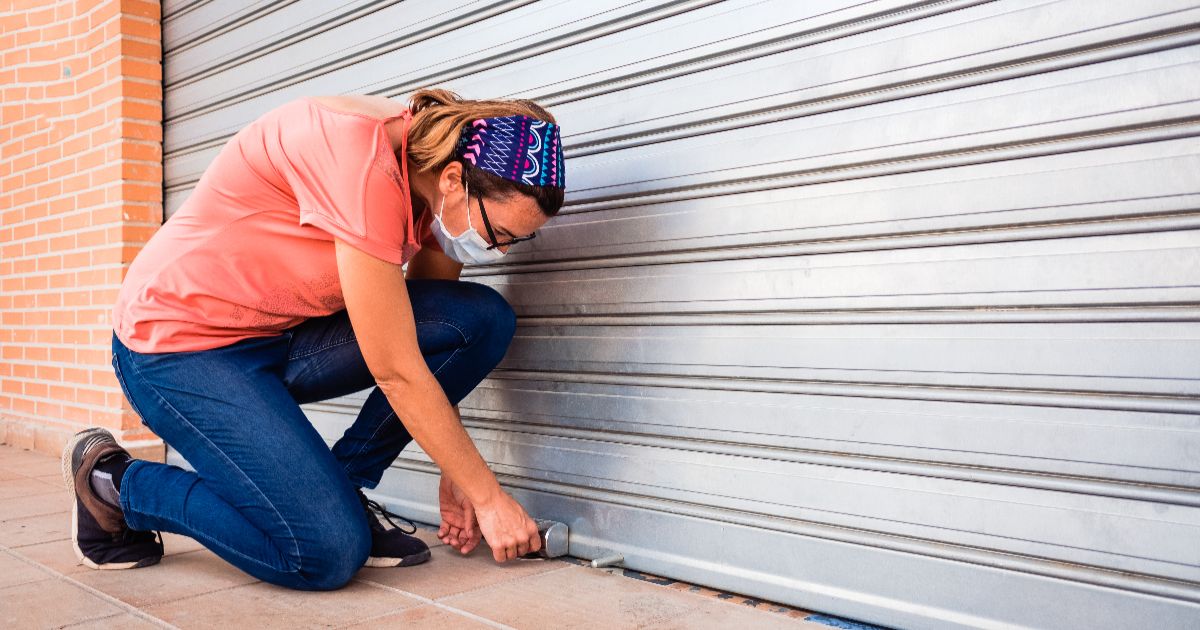
When your garage door won’t close, the most common causes are blocked sensors, dirty sensor lenses, track problems, bad rollers, or an opener setting issue.
Start with the simple checks first, but do not force the door down.
A garage door that will not close can leave your home open, damage the opener, or create a safety risk.
Garage Door Won’t Close? Start With the Sensors
A garage door most often won’t close because the safety sensors are blocked or misaligned. These sensors sit near the floor on both sides of the garage door opening. The sensors send a light beam across the bottom of the door. If a box, broom, bike, toy, leaf, or trash can blocks that beam, the opener thinks something is in the way. The door may start to close, then go back up. Check both sensor lenses. Dust, spider webs, rain spots, and dirt can block the signal. Wipe the lenses with a soft dry cloth. Then look at the sensor lights. Most garage door openers show steady lights when the sensors line up. A blinking light usually means one sensor is offline. Try this:- Move anything near the door opening.
- Clean both sensor lenses.
- Check for loose wires.
- Move the sensor bracket a little at a time.
- Test the wall button again.
Check the Tracks and Rollers
A garage door may not close when the rollers cannot move smoothly in the tracks. Dirt, dents, loose bolts, or a bent track can prevent the door from reaching the floor. Stand inside the garage and look at both sides of the door. The rollers should sit inside the metal tracks. The tracks should look straight from top to bottom. Look for these signs:- A roller is outside the track
- The track has a bend
- A bolt looks loose
- The door moves unevenly
- The door stops at the same spot
- You hear scraping or grinding
Watch for Shaking or Jerking
A garage door that shakes or jerks while closing has a movement problem. The cause may be bad rollers, loose hinges, dry parts, worn springs, or track damage. The door should move in a smooth path. It should not bounce, drag, or slam. If it shakes each time it closes, the opener may be fighting the door. The opener is not made to fix a bad door. It only moves the door. The springs, rollers, hinges, and tracks must properly carry the load. Common causes of shaking include:- Dry rollers
- Worn hinges
- Loose track bolts
- Bent tracks
- Bad opener force setting
- Weak springs
- Rust on metal parts
Look at the Remote and Wall Button
A garage door remote can cause closing problems when the button sticks, the signal is weak, or the remote needs a reset. The wall button can also help you identify the root cause. Press the wall button first. If the door closes when you press the wall button but not when you press the remote, the remote may be the problem. If the door will not close from either one, the issue may be sensors, tracks, opener settings, or door hardware. For the remote, check these items:- Replace the batteries
- Stand closer to the opener
- Press the button firmly once
- Check for a stuck button
- Look at the opener antenna
- Reprogram the remote if needed
Check the Garage Door Opener Settings
The opener may stop or reverse if the force or travel settings are wrong. These settings tell the opener how far the door should move and how much pressure is safe. If the opener thinks the door touched the floor before it did, it may reverse. If it feels too much force, it may go back up as a safety move. This can happen after:- A power outage
- A new opener is installed
- A spring repair
- Track work
- Roller changes
- Normal wear over time
Clean and Lubricate Moving Parts
Dry parts can make the garage door hard to close. Rollers, hinges, springs, and bearings need proper care to operate smoothly. Use garage door spray lubricant on metal moving parts. Do not use thick grease on the tracks. Grease can hold dirt and make the rollers drag. Lubricate these parts:- Hinges
- Roller stems
- Spring coils
- Bearing plates
- Chain or screw drive if your opener uses one
Do Not Force the Door Closed
You should not force a garage door closed when it feels heavy, crooked, or stuck. Force can bend the tracks, break cables, crack panels, or burn out the opener. It may feel tempting to pull the emergency cord and push the door down by hand. That can be safe only when the door is balanced and moving straight. If the spring is weak or broken, the door can drop fast. Stop and call for help if you notice:- The door drops hard
- One side hangs lower
- A cable is loose
- A spring has a gap
- The door is stuck halfway
- The opener smells hot
- The door hits the floor and reverses
- The door makes a loud bang