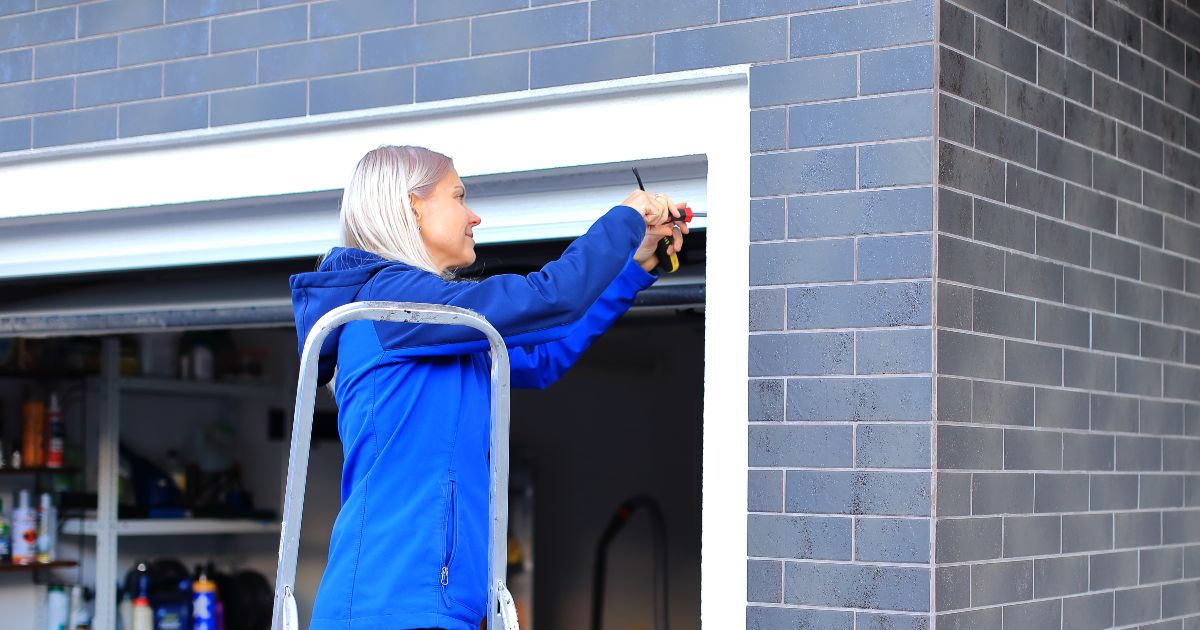
A garage door not opening usually means the opener lost power, the door is locked, a spring broke, or the safety sensors are blocked.
Some problems take only a minute to check. Other problems can be risky, so it helps to know what is safe to test and what needs a trained tech.
If Your Garage Door is Not Opening, Check These First
A garage door not opening does not always mean the opener is bad. Many times, the cause is a dead remote, no power, a locked door, or something blocking the path. Start with the simple checks first. They can save you time and help you avoid damage.- Press the wall button.
- Try the remote again.
- Replace the remote batteries.
- Check the opener light.
- Make sure the opener is plugged in.
- Check the breaker box.
- Look for a manual lock.
- Move items away from the door.
The Opener Runs, But the Door Does Not Move
If the opener runs but the door does not move, the issue may be in the opener rail, trolley, drive belt, chain, or garage door spring system. The motor can make noise even when it is not lifting the door. Look at the opener rail while someone presses the wall button. The trolley should move along the rail. If the motor runs but the trolley does not move, the opener may have a worn gear, a loose chain, a broken belt, or a faulty drive part. If the trolley moves but the door stays down, the emergency release may be pulled. This is the red cord that hangs from the opener rail. It lets you open the door by hand when power goes out. To reconnect many openers, close the door fully and run the opener. The trolley may snap back into place. Do not try this if the door is crooked, stuck halfway, or too heavy to lift. When the motor runs, but the door stays still, stop using the opener until you find the cause.Safety Sensors Can Stop the Door From Working Right
Safety sensors can stop a garage door from working when they are blocked, dirty, or out of line. They sit near the floor on both sides of the garage door opening. Each sensor sends or reads a small light beam. If the beam is blocked, the opener may refuse to move the door the right way. This problem is common in busy garages with tools, bikes, boxes, or trash cans near the door. Check for these sensor issues:- A box blocks the beam.
- A broom or bike sits in front of the sensor.
- Dust covers the lens.
- Spider webs block the light.
- One sensor was bumped.
- A sensor wire came loose.
- A sensor light is blinking or off.
A Broken Spring Can Keep the Door Closed
A broken spring can prevent the garage door from opening because the opener cannot lift the door’s full weight on its own. The spring does most of the heavy lifting. Most garage doors use torsion springs above the door or extension springs on the sides. These springs hold a lot of tension. When one breaks, the door may feel very heavy or only open a few inches. You may have a broken spring if you notice these signs:- You heard a loud bang in the garage.
- The door opens a few inches and stops.
- The opener hums or strains.
- The door feels too heavy to lift by hand.
- You see a gap in the spring.
- One side of the door lifts higher.
- The cables look loose.
The Door May Be Jammed or Off Track
A garage door may not open when a roller pops out, a track bends, or the door jams against the frame. The opener may pull hard, but the door will not move the right way. Look at both sides of the door. The rollers should sit inside the metal tracks. The door should look straight. The gaps on both sides should look even. Common signs of a track or roller problem include:- The door looks crooked.
- A roller sits outside the track.
- The track has a dent.
- The door shakes hard.
- The door stops at the same spot.
- You hear scraping sounds.
- The cable looks loose.
Remote and Keypad Problems Can Look Like Opener Failure
A bad remote or keypad can make it seem like the garage door opener is broken. In many cases, the opener works fine from the wall button. Start with new batteries. Then stand close to the opener and press the remote. If it works up close but not from the driveway, the remote may have a weak signal. For a keypad, enter the code slowly. Make sure the buttons respond. If the keypad lights up but the door does not move, the code may need to be reset. Remote and keypad problems can come from:- Dead batteries
- Worn buttons
- Lost opener code
- Weak signal
- Damaged antenna
- Weather damage
- Old keypad wiring
Power Issues Can Make the Opener Seem Dead
A garage door opener needs steady power to work. If the outlet, breaker, or GFCI outlet trips, the opener may not respond at all. Look at the opener light first. If no light turns on, check the power cord. Make sure it is plugged in all the way. Then check the breaker box. A tripped breaker can shut off the garage outlet. Some garages also use a GFCI outlet. If that outlet trips, it may cut power to other outlets in the garage. Press the reset button on the GFCI outlet if you see one. Then test the opener again. Power problems can happen after storms. Miami homes deal with heavy rain, heat, and power surges. A surge can damage the opener board, wall button, or sensor wiring. If the breaker keeps tripping, stop resetting it. That can point to a bad motor, a shorted wire, or an outlet problem. We do not want to ignore an electrical issue near a moving garage door.When You Should Stop Troubleshooting
Stop troubleshooting when the door feels heavy, crooked, stuck, or unsafe. A garage door can weigh hundreds of pounds, and one bad move can cause injury. Call a garage door tech if you see any of these signs:- Broken spring
- Loose cable
- Hanging cable
- Door off track
- Bent track
- Door stuck halfway
- Door slams shut
- Opener smells hot
- The door feels too heavy
- The opener runs, but the door does not move